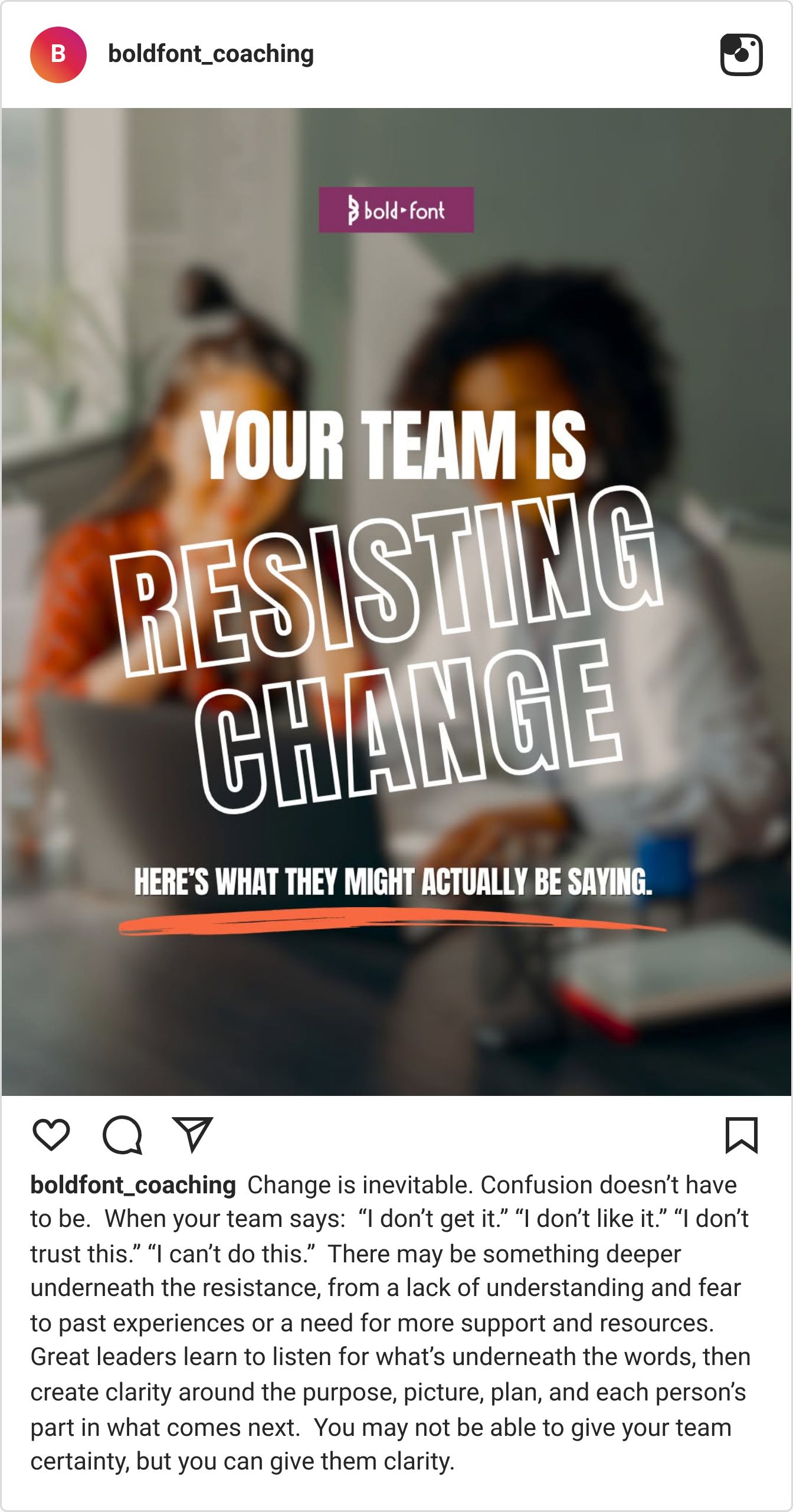
Your team nodded through the reorg announcement this morning and nobody pushed back. Fast forward to a month later, and half of them still aren't using the new process and procedures within the reorg, and the hallway conversations sound absolutely nothing like the meeting did.
Research in the Harvard Business Review found that 70% of large-scale change efforts fail. Are you surprised? The breakdown lies in the stretch between the announcement and the day the change sticks. Here's how to lead your people through it.
Change and transition aren't the same thing
Change is the outside event, like a new manager, a new system, or a merged department. It usually happens on a date and can be at a specific time. Transition is the inside part: the psychological process each person goes through to come to terms with the new situation. It can take weeks or months, and everyone moves at their own speed.
Most change plans cover the change and skip the transition, but the transition is where your people are right now and it's what they need to focus on the most. There's often grief in it (even when the change is an improvement) and your top performer might like the new system and still miss the one they'd mastered. Both can be true!

Your team is spread across the change curve
People move through change in predictable stages:
Shock and denial
Frustration
The low point
Experimenting
Decision
Integration
But, when the “new” way becomes the “normal” way, things start to feel really good, I promise! It just isn't a straight line to get there, and people slide back, sometimes in the same afternoon. While one person is experimenting, another is still saying "they'll walk it back." One all-hands message or one way of addressing the team likely can't meet both of their needs.
POLL TIME! Where is your team on the change curve right now?
If you took this poll and your team is somewhere between shock/denial and at their point of experimentation, our one-time small group coaching session is for you. (Best part? I bet your employer will cover the $50 cost to join.)
Every change message needs four things to aid commitment
Purpose: What problem are we solving, and what happens if we don't?
Picture: What will this look and feel like when it's working?
Plan: What happens when, and where do people get training and support?
Parts: What role does each person play?
Here's what that sounds like when you roll out new billing software:
"Our current system caused three billing errors this quarter, and two clients noticed. Six months from now, invoices will go out in one click and nobody's re-entering data at 6 p.m. on a Friday. To do this, training starts the week of the 12th, we'll run both systems side by side for 30 days to learn the ins-and-outs, and I'm holding office hours every Tuesday for questions. Maria, you know the old system better than anyone, so I'd like you to help us test the new one. What questions do you have?"
Those four sentences answer most of what your team would otherwise spend a month asking each other.
And remember, if you don't have all the answers yet, just say so! People handle "I don't know yet, and I'll tell you when I do" far better than silence or a guess at a wrong answer you’ll have to walk back on later.
Change is constant. Conflict doesn't have to be.

Knowing the above framework is one skill and using it with a frustrated team member is another. Remember, our October coaching session works through real scenarios in just a few days: handling tension on your team, keeping trust while things shift, and moving people from resistance to commitment. Bring the change you're dealing with right now.
Compliance isn’t commitment
Your #1 takeaway this week is to remember the following: Compliance means people do what's required because they have to. Commitment means they believe in the change and put their own effort behind it.
Here’s how you can tell the difference: Does your team use the new system when you're watching? That’s compliance. When something breaks down, does a committed person find a workaround instead of treating it as proof the change was a mistake? That’s commitment.
A deadline forces compliance whereas commitment has to be earned, and it all starts with how you (yes you, leader!) communicate.
We’re on your side,
Lauran Arledge
Founder, Bold Font